What to Do When Your Keyless Car Won't Open
Modern cars have made life simpler in many ways, but a keyless car lockout can still catch you off guard. When your key fob stops communicating with the vehicle or the proximity sensor fails to recognize your presence, you may find yourself standing next to a car that refuses to unlock. The situation can feel frustrating, especially if you are in a hurry or in a less convenient part of town. Knowing what to check first can save time and reduce stress. This article walks through the common points to verify when you are dealing with a keyless entry issue, helping you decide whether the problem is something you can resolve on your own or a situation that calls for a professional locksmith.
Check the Key Fob Battery First
The most frequent cause of a keyless car lockout is a drained or dying battery inside the key fob. The fob relies on a small lithium cell to send a signal to the car's receiver. When that battery gets weak, the signal may not reach the vehicle or may be too faint to trigger the unlock sequence. Many drivers assume the fob is working because the indicator light still flashes, but that light often functions even when the battery is too low for a reliable transmission. access for a keyless vehicle
If you have a spare fob, try using it to see if the problem lies with the primary fob. If the spare works, you need a new battery. Most fobs have a small seam or a screw that lets you pop open the casing and replace the cell. It is a quick fix that often resolves the issue without further steps. If you do not have a spare, pressing the push start button on the fob repeatedly while standing close to the door handle may sometimes coax a weak signal through, but it is not a reliable method. Replacing the battery is the proper solution.
Try the Manual Door Handle
Some keyless cars still have a physical key hidden inside the fob or a mechanical override on the door handle. Look for a small release button or notch on the fob that lets you slide out a traditional blade key. Insert that key into the manual door handle lock and turn it. This mechanical link bypasses the electronic system entirely. Not every keyless vehicle includes this feature, but many do, especially models that still offer a backup entry method. Checking for this option can save you from assuming the car is completely locked when a simple twist of a hidden key will open it.
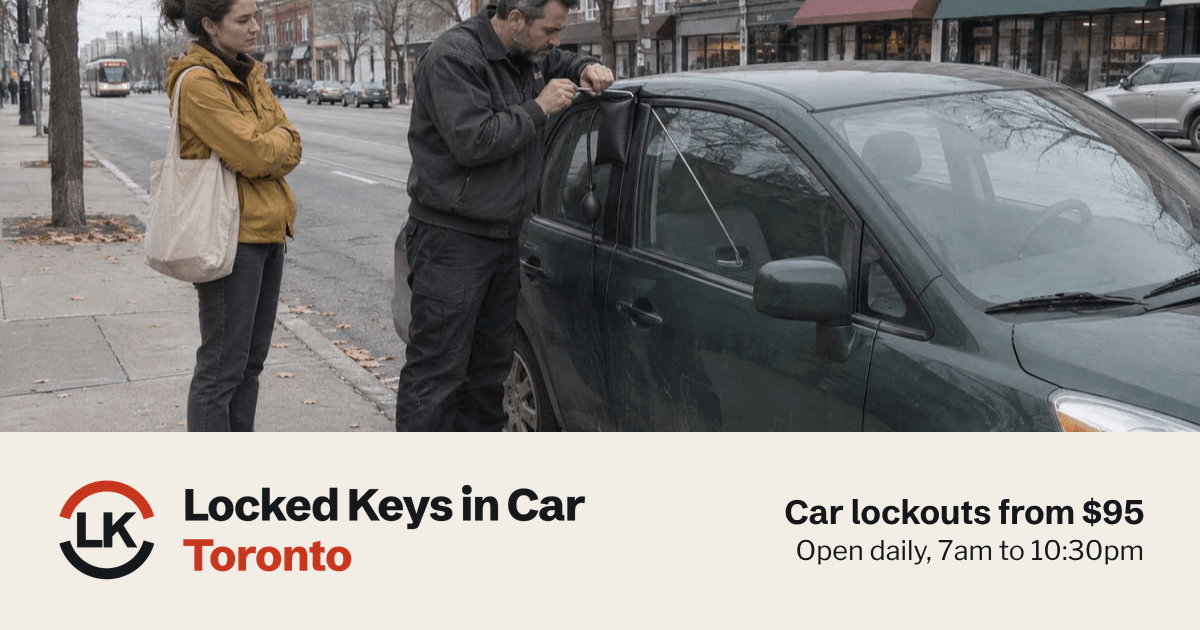
If your car does not have a physical key slot, you may still have a manual release lever inside the vehicle that can be reached through a gap in the window or door seal. This is less common but worth checking if you can see a small handle or tab near the interior door latch. Reaching it may require a long reach tool, which is a thin rod with a hook or loop at the end. Professional locksmiths carry these tools, but you might have one at home if you do any DIY work. The key point: do not assume the electronic failure means the door is permanently sealed. Mechanical options may still exist.
Check for Interference with the Proximity Sensor
Keyless cars use a proximity sensor to detect the fob when you are within a certain range. If the sensor is blocked by metal objects, electronic devices, or even certain types of bags, it may not pick up the signal. Try moving closer to the door handle with the fob in your hand, away from your body. Hold it directly against the handle or the spot where the antenna is located. This changes the signal path and can sometimes overcome mild interference.
Another common issue is a dead or low car battery. The proximity sensor and the receiver for the fob draw power from the vehicle's battery. If the car battery is too weak to run the electronics, the sensor may not respond even if the fob is fine. Try jump-starting the car or using the mechanical key if available. If you can hear the vehicle alarm chirping or the interior lights flickering, the battery may be borderline. A professional locksmith can help you gain access for a keyless vehicle in this situation without causing damage to the door or frame.
When to Use an Air Wedge and Long Reach Tool
If none of the above steps work, you may need to physically create a gap between the door and the frame to manipulate the lock mechanism from the inside. An air wedge is a small inflatable bladder that you slide into the gap at the top of the door. Pumping it gently pushes the door outward just enough to insert a long reach tool. That tool can then press the interior unlock button or pull the manual door handle from inside. This technique requires care to avoid bending the door or damaging the seal. It is best left to a trained locksmith who has experience with different car models and knows how to avoid setting off the vehicle alarm or breaking the weatherstripping.
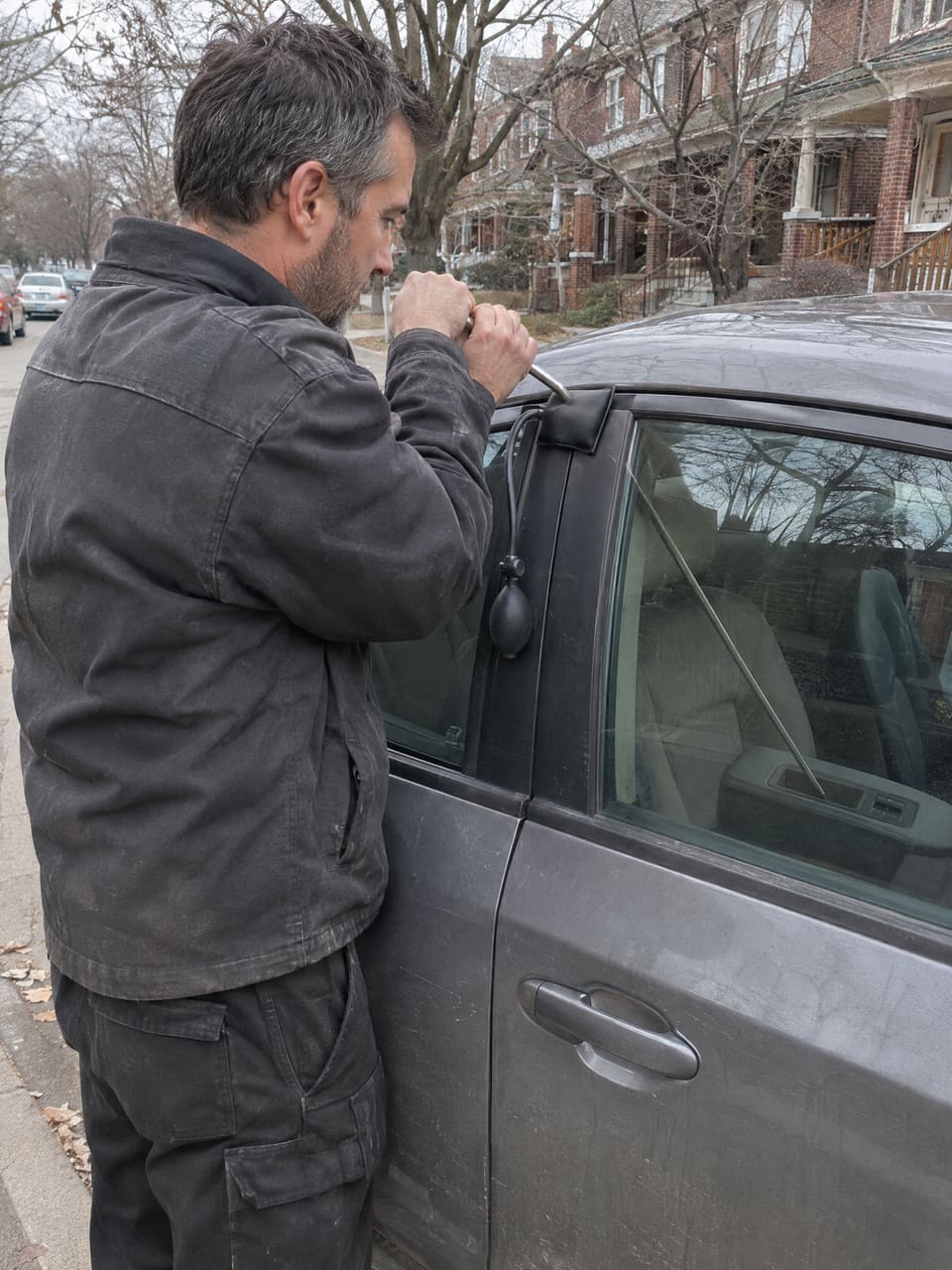
Do not try to pry the door open with a screwdriver or a crowbar. That will almost certainly damage the paint, the door panel, or the lock cylinder, leading to costly repairs. Professional locksmiths use specialized tools that apply force evenly and only where it is safe. If you are in a hurry and the situation feels urgent, calling a mobile locksmith is often the fastest and most cost-effective choice. They can be at your location within a short time and resolve the lockout without causing further issues.
Preventing Future Lockouts
Once you are back inside your car, take a few minutes to prevent a repeat of the same problem. Replace the fob battery every year or two, even if it still seems to work. Keep a spare fob in a safe place at home or in your wallet if it fits. If your car has a physical key, store a copy somewhere accessible, such as in a magnetic box attached to the underside of the car (but only if you are comfortable with the security risk). You can also program a second fob as a backup through your car's menu system, which many vehicles allow from the driver's seat.
Another helpful habit is to test the fob's range occasionally. Walk away from the car and see at what distance the doors still respond. If the range shrinks noticeably, the battery may be wearing out. Replace it before it dies completely. Some cars also have a low-battery warning on the dashboard that tells you when the fob needs a new cell. Pay attention to that message; it is there for a reason.
When to Call a Professional
If you have tried the fob battery, the manual key, and the proximity sensor check, and the door still will not open, it is time to call a mobile locksmith. A professional has the tools and knowledge to gain access for a keyless vehicle without damaging the car. They can also handle situations where the car battery is completely dead, the fob is lost or broken, or the lock mechanism has failed internally. Trying to force entry on your own can turn a minor inconvenience into a major repair bill. A locksmith will assess the situation quickly and choose the right method, whether that involves an air wedge, a long reach tool, or a specialized electronic bypass.
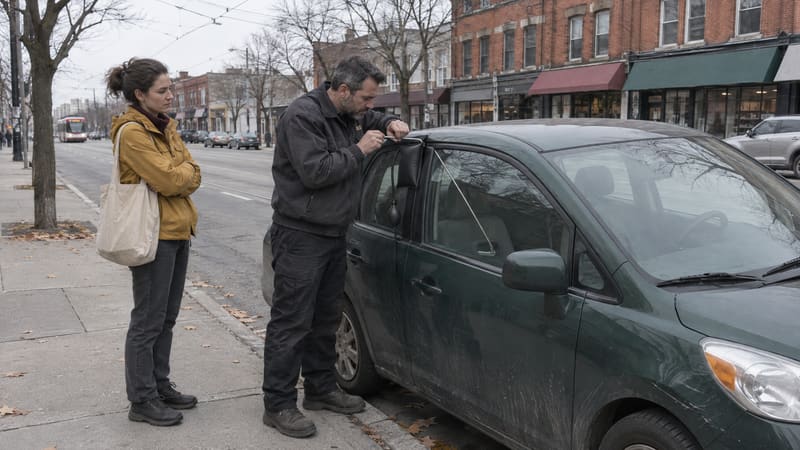
When you call, provide the make, model, and year of your car. This helps the locksmith prepare the correct tools and techniques. Also mention whether you have a spare fob or a physical key available, even if it is not with you at the moment. Sometimes the locksmith can guide you through a simple fix over the phone, saving you the cost of a service call. If not, they will arrive ready to handle the specific lockout scenario your car presents.
Final Thoughts
Keyless car lockouts are more common than many drivers expect, but they are rarely a crisis. Most of the time the problem is a dead fob battery or a weak car battery, and a simple replacement or jump-start gets you back on the road. When the issue is more complex, knowing what to check and when to call for help makes the experience less stressful. Keep a spare battery in your glove compartment, know where your physical key is, and remember that a professional locksmith can resolve the situation quickly and without damage. With a little preparation and a calm approach, a keyless lockout becomes just a minor delay instead of a major headache.